
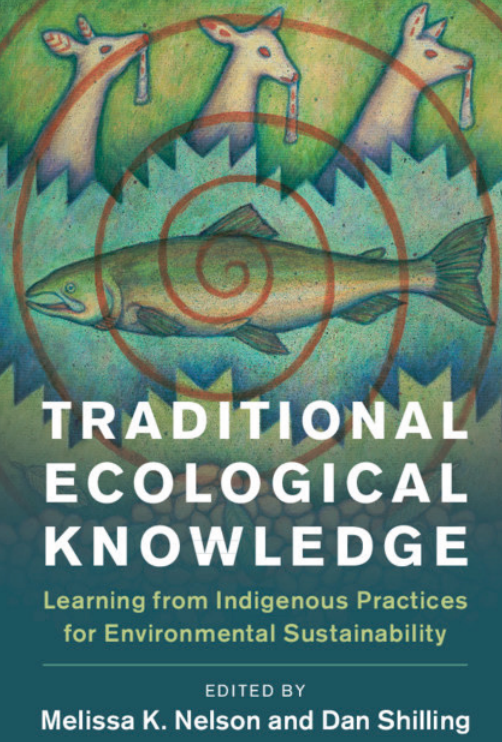
Nelson, M. K., & Shilling, D. (Eds.). Traditional Ecological Knowledge: Learning from Indigenous Practices for Sustainable Development.
Overview Purpose and Scope: Traditional Ecological Knowledge is a collection of interdisciplinary essays that explore the rich, place-based knowledge systems developed over generations by Indigenous and local communities. The book examines how these knowledge systems—referred to as Traditional Ecological Knowledge (TEK)—inform sustainable practices, resource management, and environmental stewardship. The editors aim to demonstrate that TEK is not only a cultural asset but also a practical tool for addressing modern ecological challenges.
Core Argument: The volume argues that TEK, with its holistic understanding of the environment, offers vital insights into natural resource management that complement and often challenge Western scientific approaches. The authors emphasize that ecological wisdom derived from centuries of lived experience can play a crucial role in conservation, sustainable development, and adapting to environmental change.
- Key Themes and Examples of Applied Ecological Knowledge 2.1. Definition and Importance of TEK Definition: TEK encompasses the cumulative body of knowledge, practices, and beliefs about the relationships of living beings (including humans) with one another and with their environment. It is transmitted orally, experientially, and through cultural practices.
Cultural and Historical Context: TEK is deeply embedded in the cultural, spiritual, and social fabric of Indigenous communities. It is not static but evolves through continual interaction with the local ecosystem.
2.2. Applied Ecological Knowledge in Action A. Fire Management and Landscape Ecology Controlled Burning Practices:
Australia: Aboriginal peoples have used controlled burns for thousands of years to manage bushlands, reduce wildfire risks, and promote the growth of certain plant species. These fire regimes maintain the health of eucalyptus forests and grasslands.
North America: Native American tribes, such as the Karuk and Yurok peoples in California, practiced “cultural burning” to clear underbrush, recycle nutrients, and encourage the growth of fire-adapted species.
B. Water Management and Irrigation Techniques Traditional Water Harvesting:
Arid Regions: Indigenous communities in regions like the American Southwest and parts of the Middle East have developed techniques such as building check dams, terraces, and water catchment systems to capture and conserve scarce water resources.
Pacific Islands: In many Pacific Island cultures, TEK informs the sustainable management of freshwater lenses and the careful allocation of water resources critical for both agriculture and daily use.
C. Biodiversity Conservation and Land Stewardship Sacred Groves and Protected Areas:
Many Indigenous groups designate certain natural areas as sacred, which inadvertently serve as de facto conservation areas. For example, sacred groves in India and parts of Africa have preserved biodiversity by limiting resource extraction.
Agroforestry and Shifting Cultivation:
Amazon Basin: Indigenous agroforestry practices involve polyculture and shifting cultivation that mimic natural forest ecosystems, maintaining soil fertility and conserving a wide range of species.
Southeast Asia: Traditional rice-fish farming systems integrate agriculture and aquaculture, creating mutually beneficial cycles that enhance productivity and preserve aquatic biodiversity.
D. Medicinal and Ethnobotanical Knowledge Herbal Medicine:
Indigenous healers in the Amazon, Africa, and Asia have developed extensive pharmacopoeias based on local flora. These traditional remedies are used to treat a wide range of ailments, and modern science has increasingly validated many of these uses.
Diet and Nutrition: Traditional food systems—such as the Three Sisters agriculture (corn, beans, and squash) of Native American communities—demonstrate a deep understanding of nutritional balance and complementary growth that supports human health and sustainable agriculture.
2.3. Integration of TEK with Western Science Collaborative Management Models:
Several case studies illustrate how co-management of natural resources brings together TEK and Western scientific methods. For instance, adaptive co-management in Canadian forestry and fisheries in New Zealand show how blending Indigenous observations with modern monitoring techniques leads to more resilient ecosystem management.
Policy and Conservation Strategies:
TEK has influenced international conservation policies and environmental governance frameworks, including initiatives under the Convention on Biological Diversity (CBD) that seek to incorporate Indigenous knowledge into decision-making processes.
2.4. Challenges and Barriers Intellectual Property and Cultural Appropriation:
The book discusses how TEK is often appropriated without proper recognition or benefit to the source communities, raising issues of intellectual property rights and cultural sovereignty.
Loss of Knowledge:
Globalization, environmental degradation, and cultural assimilation threaten the transmission of TEK to future generations, underscoring the urgency of documenting and integrating this knowledge into contemporary practices.
Institutional Resistance:
There is often resistance within Western institutions to integrating TEK due to differences in epistemology and methodological approaches, leading to a continued undervaluation of indigenous knowledge systems.
- Structure of the Book 3.1. Thematic Organization The book is organized into thematic sections that explore different facets of TEK, including its ecological applications, cultural significance, and the challenges faced in its preservation and integration.
3.2. Case Studies and Essays Interdisciplinary Contributions:
Various authors contribute essays and case studies, providing rich, contextual examples from diverse geographic regions and cultural backgrounds.
Each chapter typically presents a specific aspect of TEK—such as fire management or water conservation—illustrated by ethnographic research and practical examples.
3.3. Comparative Analysis Contrasting Knowledge Systems:
The book includes comparative analyses between Indigenous TEK and Western scientific practices, highlighting both the strengths and limitations of each system.
Historical Contextualization: Some chapters trace the historical development of TEK and discuss how it has evolved in response to changing environmental and social conditions.
- Significance and Impact 4.1. Contributions to Environmental Anthropology and Conservation Redefining Knowledge Paradigms:
Traditional Ecological Knowledge challenges the dominance of Western scientific paradigms by emphasizing the validity and richness of Indigenous ways of knowing.
Practical Applications: The book has practical implications for conservation and sustainability, providing a framework for integrating TEK into modern environmental management and policy.
Cultural Preservation: It highlights the importance of preserving Indigenous knowledge as a vital resource for both cultural identity and ecological resilience.
4.2. Policy and Community Impact Informing International Policies:
Insights from the book have been influential in shaping policies under international environmental agreements that seek to incorporate Indigenous perspectives.
Empowering Indigenous Communities: By recognizing the value of TEK, the book supports efforts to empower Indigenous communities, ensuring they have a voice in the management of their natural resources.
- Conclusion Traditional Ecological Knowledge, edited by Melissa K. Nelson and Dan Shilling, provides a comprehensive exploration of the diverse and practical wisdom embedded in Indigenous cultures. The volume demonstrates that TEK is a dynamic, holistic system that encompasses detailed ecological observations, sustainable resource management practices, and profound cultural values. Through numerous examples—ranging from controlled burning and water harvesting to biodiversity conservation and herbal medicine—the book illustrates how Indigenous knowledge not only informs environmental stewardship but also offers critical insights for addressing contemporary ecological challenges.
Ultimately, the book calls for a rethinking of how we understand and value knowledge. By bridging the gap between Indigenous and Western epistemologies, it offers a pathway toward more sustainable, inclusive, and culturally respectful approaches to environmental management and conservation.
