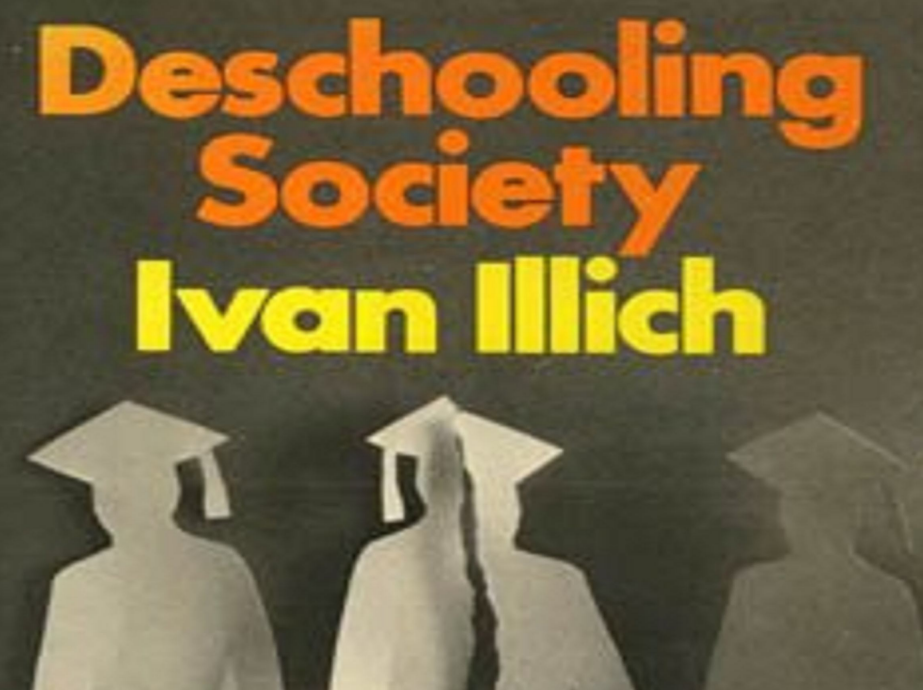
Ivan Illich’s book, Deschooling Society, released in 1971, takes a bold stance on education. At a time when schools were expanding everywhere in the postwar West, Illich argued that traditional schools often get in the way of real learning. He saw formal education as a way to standardize people, push conformity, and support social hierarchies. Instead of relying on schools, he suggested creating decentralized, peer-led networks to tie learning back to everyday experiences. Even now, over fifty years later, his ideas resonate with many current trends in open education, but they still face challenges related to quality, scaling up, and equitable access to resources.
Illich places his critique in the larger context of questioning big bureaucratic systems. During the late 1960s and early 1970s, protests against the war and for civil rights highlighted the limitations of relying solely on technical authority. In this environment, Illich pointed to schools as examples of an “industrial method” applied to education. Just like factories transform raw materials into standard products, schools turn kids into uniform learners through set curricula, calendars, and credentials. Once age-based classrooms and strict schedules came into play, learning became disconnected from what kids were genuinely curious about. Students had to learn at a set speed, no matter if they were ready or not. This system can stigmatize slower learners while putting faster ones in a box that fits everyone. The unspoken rules—like obeying schedules, accepting authority, and sticking to outside evaluations—spill over into life outside the classroom, conditioning people to accept hierarchy in jobs and community roles. Illich critiques the idea that diplomas are the key to success. He believes they act like a ticket that gives certain people a leg up while leaving many skilled folks behind just because they don’t have the right papers. Fields like medicine, law, and engineering keep tight control by requiring degrees, which shuts out newcomers who could potentially be very skilled. Schools, in this view, act as gatekeepers, keeping the class divide alive: those who succeed in school gain knowledge and status, while those who don’t fall behind. Illich calls this “over-schooling,” which makes people overly reliant on experts. As families turn to teachers for help, they lose faith in their own ability to learn and figure things out on their own. This creates a culture where diplomas are valued more than real-world skills.
Instead of just criticizing schools, Illich imagines a different approach with “learning webs.” These would be informal, self-run networks that encourage interaction among peers and experts. He outlines four main parts of a learning web. First, a reference service would help connect people with others willing to teach skills for free. Second, a resource registry would list books, labs, and creative spaces available for everyone to use. Third, a peer-matching service would help learners find others at the same skill level or with similar interests, promoting teamwork. Lastly, a skill-exchange bank would let people earn “learning credits” by teaching others, which they could use to learn a new skill in return. By focusing on mutual support rather than formal qualifications, these webs would help people learn at their own pace and regain their independence. Illich suggests some interesting ideas to support learning in communities, like “skill banks” and “learning kits.” In skill banks, people exchange their skills. For example, if someone teaches carpentry for an hour, they might get an hour of language lessons in return. This way, it's not about money; it's more about helping each other out.
Learning kits would have materials, tools, and guides available for free in places like libraries or community centers. These would let people try out hands-on activities—such as building a radio, cooking traditional dishes, or making pottery—without needing to sign up for formal classes. The idea is to keep learning practical and focused on real experiences instead of just sitting through lectures.
Illich’s ideas seem pretty close to some trends we see today. In the 21st century, things like MOOCs and Open Educational Resources are breaking free from the traditional school system. Websites like Coursera, edX, and Khan Academy offer free or cheap access to lectures and community discussions. Plus, digital badges and microcredentials are starting to replace typical diplomas with a focus on specific skills. There are also peer-learning groups—think Reddit study forums or local meetups—that let people connect over shared interests, much like Illich’s idea of matching peers. Similarly, open-source software communities and collaborative sites like Wikipedia show how information sharing can happen outside a top-down approach, which was part of Illich's vision. There's a clear gap between Illich’s ideas and what we're seeing today. Many online courses still stick to the old university system, giving out degrees or certificates that, even if cheaper, still fit into the traditional mold. Tools for personalized learning focus more on algorithms than on real human interaction, which might take away from the social side of learning. Plus, there's still a big digital divide: people without good internet or current devices find it hard to take advantage of online education. Because of this, Illich’s push for fair access to learning resources hasn’t really happened yet.
Still, Illich’s view of learning as something that’s tied to life and the community really connects with people today. As careers change more often, the idea that education should only happen in formal settings for young people doesn’t really hold up anymore. Freelancers and gig workers often turn to their peer networks and self-learning to pick up new skills—a trend Illich predicted. On top of that, there’s a growing focus on local knowledge and teaching that speaks to people's backgrounds, which shows that we need to make learning relevant to the community. Learning kits that include traditional crafts, local languages, and specific regional knowledge can keep cultural diversity alive while teaching practical skills. Illich’s ideas about a better way to learn face a few tough challenges. First off, how do we make sure that the teachers we find online are actually good at what they do? Without any clear standards or ways to check them out, it can be hard for learners to trust what they find. Sure, if someone gets good reviews from their peers, that helps, but many communities don’t have the means to really vet teachers.
Then there’s the issue of making this approach work for larger groups. What works well in small communities might struggle in big cities where things get complicated and expensive to manage. Plus, there’s the resistance from traditional schools and universities. They have a lot of backing from governments and cultural expectations, so changing that system is no small feat.
To tackle these issues, a mix of online and in-person learning seems like a good way to go. Digital tools can personalize learning, while local mentors and hubs create a supportive environment for students. Places like public libraries, makerspaces, and coworking spots can turn into “learning commons” where people can take classes, access resources, and connect with others—all without signing up for a formal degree. Support from governments and organizations can help fund these community spaces, improve internet access in areas that need it, and validate nontraditional qualifications.
In the end, Illich’s thoughts in Deschooling Society are still really relevant today as they challenge the very idea of standard education. He points out how traditional schools often create uniformity and dependency. Although we've made strides with online courses and open resources, there are still gaps to fill in terms of quality and reaching everyone. As job markets keep changing, Illich’s vision gives us valuable ideas for reshaping education so that everyone can learn what they need, when they need it, alongside their peers and mentors, without being tied down by formal schooling.
References Brown, J. S., & Adler, R. P. (2008). Minds on fire: Open education, the Long Tail, and Learning 2.0. EDUCAUSE Review, 43(1), 16–32. Illich, I. (1971). Deschooling Society. New York, NY: Harper & Row.
